A capable aircraft still needs an approved operating context
An aircraft can demonstrate an impressive flight without being ready for routine use in shared airspace. The vehicle's design, condition, people, procedures and operating environment all matter. “Certified”, “cleared” and “demonstrated” describe different pieces of evidence, and should not be substituted for one another.
This guide explains those distinctions rather than prescribing a route to flight approval. Requirements vary by country, authority, aircraft and activity. The UK Military Aviation Authority and the US Federal Aviation Administration sources below illustrate separate military and civil frameworks; one should not be applied automatically to the other [1][2].
Four questions behind the word safe
- Design assuranceThe defined aircraft type and configuration.
- Continuing airworthinessThe condition and records of the individual aircraft.
- Operational arrangementsPeople, procedures and the proposed activity.
- Airspace accessThe permissions and coordination relevant to that activity.
Design assurance addresses whether a defined type and configuration meet the applicable requirements. Continuing airworthiness concerns keeping individual aircraft in an acceptable condition. Operational arrangements address how a particular activity will be conducted. Access to airspace involves the relevant permissions and coordination. Progress in one area does not automatically complete the others.
An everyday analogy is a bus. Approving a vehicle model does not establish that a particular bus has been maintained, that its driver is qualified, or that every road is suitable for its use. The analogy is imperfect, but it helps explain why an aircraft certificate cannot carry the entire safety argument.
What detect and avoid actually contributes
Detect-and-avoid functions concern recognising relevant aircraft encounters and supporting appropriate action. The FAA's research describes the challenge of defining and assessing these functions within the aircraft system [3]. This is broader than simply fitting a sensor: observations, processing, displays and the response available to the operator or automation must work together.
A transponder-based picture and a visual or radar observation are not necessarily equivalent. Equipment may depend on other aircraft transmitting compatible information. A technical description should state the assumptions rather than allowing the presence of one device to imply awareness of everything nearby.
The operator also needs a usable warning. Too many nuisance alerts can increase workload; an alert that is accurate but too late may be of limited value. This makes human factors and the complete response chain part of the assessment, rather than treating detection as the only milestone.
Real example: Protector's European transit
The RAF's account of Protector's first European transit is an example of a reported flight milestone [4]. Such an event demonstrates what was accomplished in that stated setting. It does not, by itself, establish permission for every operator, route, weather condition or aircraft configuration.
Reading the event this way preserves its significance without overstating it. The useful follow-up is to identify the authority, approvals and conditions supporting the operation. A transit is evidence about a particular activity; type-design assurance and recurring operations remain separately described matters.
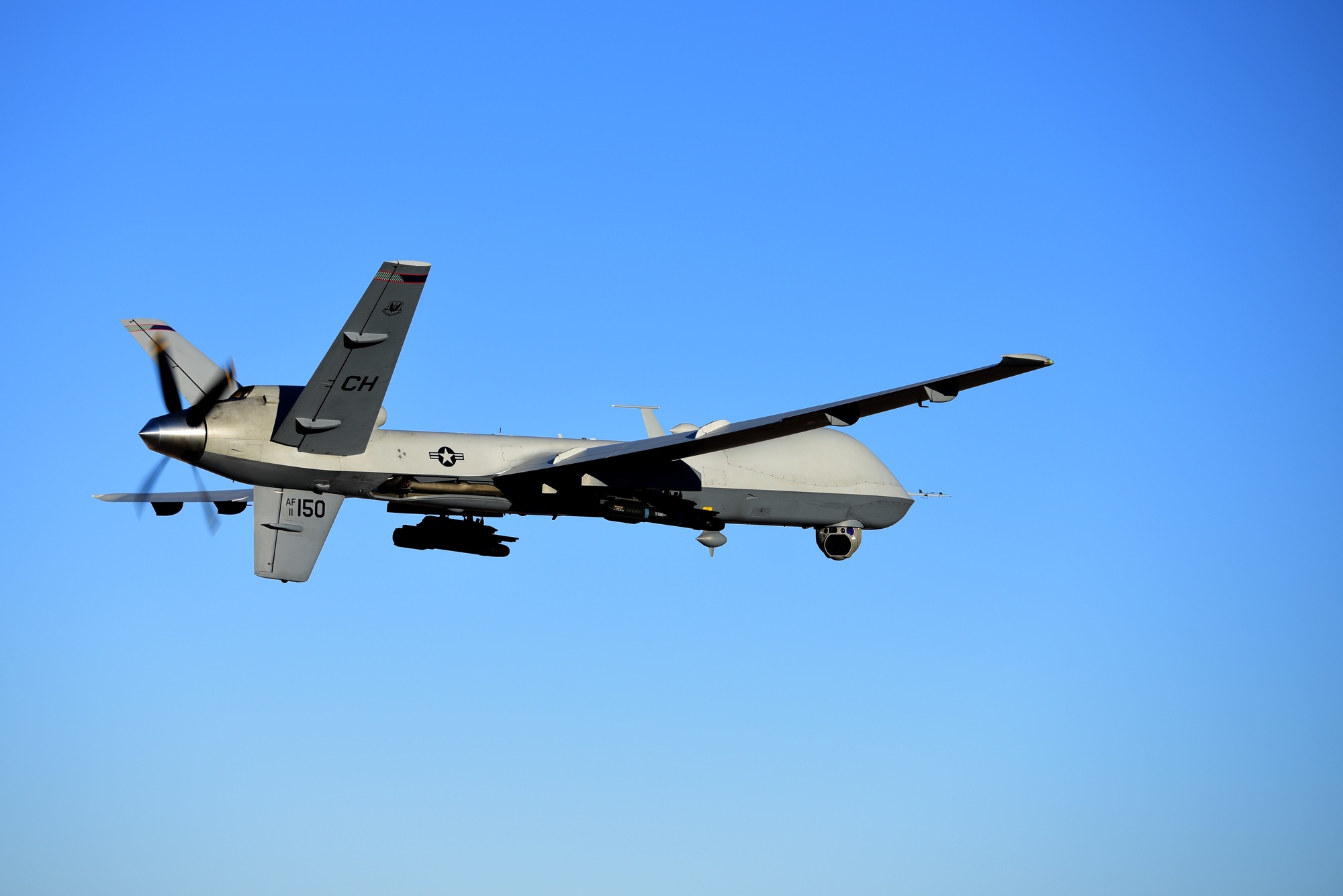
The historical MQ-9 photograph accompanying this guide illustrates a remotely piloted aircraft. It is not a photograph of the Protector transit or evidence of that event's approvals.
Worked example: changing a sensor installation
Imagine a fictional observation aircraft that already flies in a defined configuration. Its operator wants to fit a new camera. Even if the camera is lighter, the change can affect power demand, cooling, software, electromagnetic compatibility or the aircraft's balance. “It fits” is not a complete assessment.
The operator needs to establish how the change is controlled and what evidence remains valid. Not every alteration requires repeating every test, but the decision itself should be documented through the applicable process. This is why configuration identifiers and software versions are more useful than a generic claim that an aircraft family is certified.
Software updates are physical-system changes too
An update can change the way an aircraft interprets inputs, presents warnings or handles an exceptional condition. Maintaining confidence therefore includes version control, records and a defined reassessment process. Treating software as an invisible accessory understates its relationship to the aircraft's behaviour.
The same principle applies to a remote control station. An airborne vehicle and its supporting station form part of the operating system. Familiar aircraft hardware does not remove the need to understand changed ground software or operator procedures.
How to read certification announcements
- Identify the issuing authority and the exact certificate, approval or milestone described.
- Record the aircraft variant and configuration, including relevant software.
- Distinguish design assurance, individual aircraft condition and permission for the intended activity.
- Check whether the announcement concerns a trial, limited operation or a broader approval.
- Look for explicit limitations rather than inferring unlimited access from celebratory language.
Does a military approval automatically transfer to civil use?
No automatic transfer should be assumed. Different authorities and operating frameworks may apply. The correct reference is the authority responsible for the proposed activity, using current requirements and the actual aircraft configuration.
Why does this affect usefulness?
A platform that cannot train, transit or operate where needed may deliver less practical value than its performance figures suggest. Airspace integration is therefore part of capability and support planning, not merely an administrative detail after the aircraft is purchased.
Publication history
- — Expanded into an illustrated guide with worked examples, comparison visuals and linked primary sources.
Suggest a correction to this entry
Follow the evidence
Source types identify who makes the claim. Programme milestones and supplier statements should be read in context.
- UK Military Aviation Authority — certification framework (opens in a new tab)Government / authority
- FAA — Unmanned aircraft certification (opens in a new tab)Government / authority
- FAA — Detect-and-avoid operational assessment (opens in a new tab)Government research
- RAF — Protector European transit, 11 June 2026 (opens in a new tab)Operator announcement