Modularity is a promise about interfaces
A modular system is designed so that parts or mission equipment can be changed without redesigning the whole vehicle. That may mean a camera payload, a sensor mast, a ground-robot attachment or an aircraft launch configuration. The benefit is flexibility: one supported platform can serve several needs, and individual components can evolve at different rates.
But “modular” does not mean “anything works with anything”. The interfaces define the promise. They include physical attachment, power, information exchange, software, environmental protection and the process for accepting the changed configuration. Omitting one can turn a quick hardware swap into a lengthy integration project.
The five interfaces that determine whether a module is useful
| Interface | Question to resolve |
|---|---|
| Physical | Does the installation fit the vehicle's mechanical and environmental limits? |
| Electrical | Can the system supply and manage its power demand? |
| Information | Are data, timing and software compatible? |
| Operator | Can people use and interpret the installed equipment? |
| Support | Who tests, documents, maintains and updates the configuration? |
Mechanical fit is the most visible layer and often the least complete explanation. An attachment may bolt on yet exceed the electrical budget or generate data the control station cannot interpret. Another may work on a bench but require different cooling, vibration isolation or environmental protection on the vehicle.
Documentation matters because flexibility must survive beyond the original demonstration team. If only the supplier knows how to make a module function, changing it may remain possible but expensive and slow. Interoperability should therefore be assessed as an enduring support arrangement, not just a connector specification.
Real example: PD-2 configurations
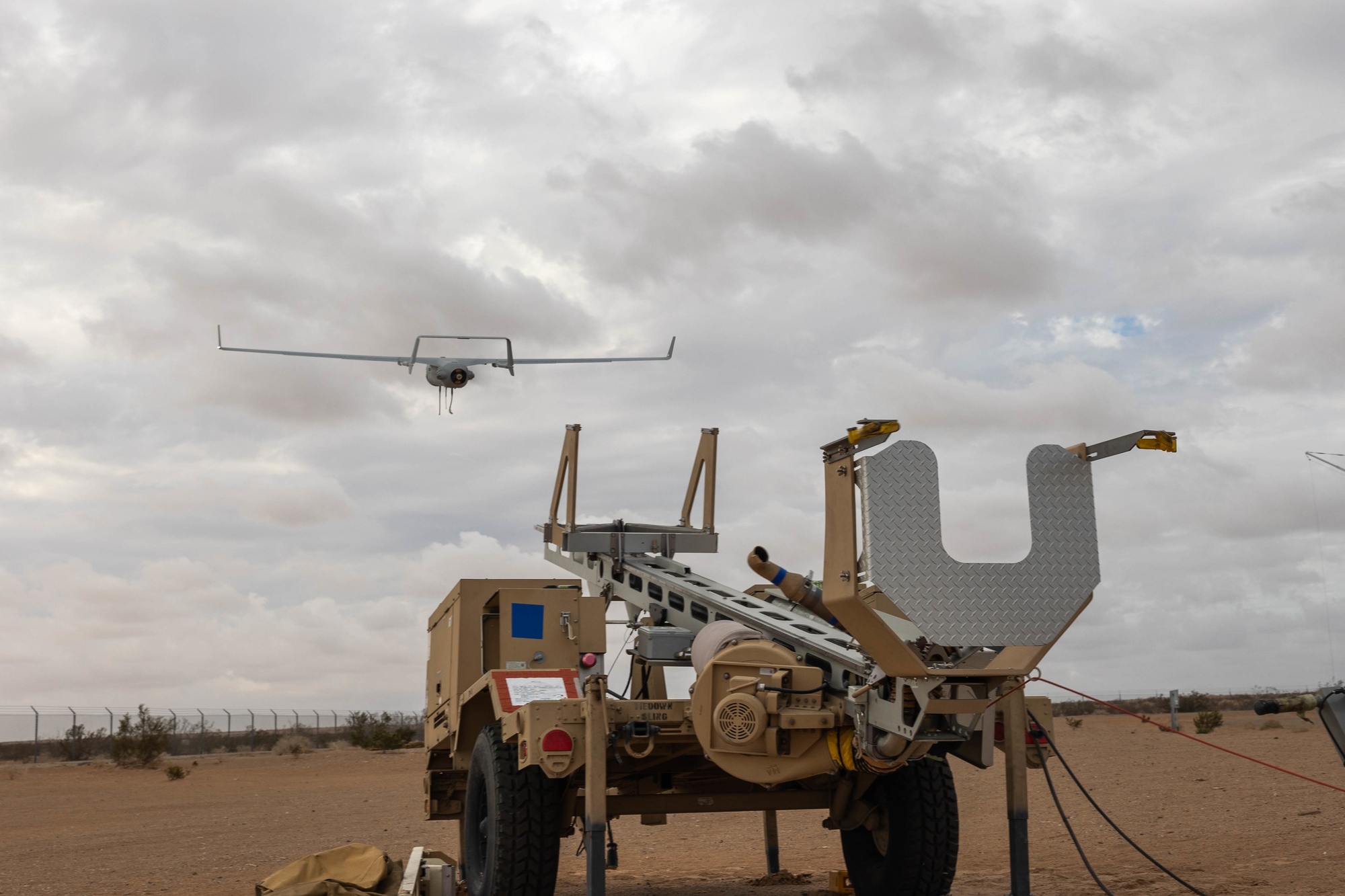
Ukrspecsystems advertises fixed-wing runway and vertical-takeoff-and-landing configurations for PD-2. Its product page lists different endurance and maximum-takeoff-weight figures for the two arrangements [1]. The example illustrates a real trade-off: a change that makes launch and recovery more flexible can also change the complete aircraft's performance.
These are manufacturer-published specifications, not an independent comparison. The important reading habit is to keep each configuration together. Do not combine the longest endurance from one arrangement with the launch capability or weight limit of another and present the result as one aircraft.
Worked example: the camera that fits but does not integrate
Consider a fictional inspection robot with a removable sensor tray. A new camera is within the tray's mass limit and uses an available power socket. It still needs a data connection, compatible software, synchronised timestamps and a way to display or export its measurements.
If the team can view the image but cannot associate it with the robot's location, the installation might support live inspection but fail to produce a repeatable survey. The hardware has been fitted; the intended information service has not yet been delivered. That difference is the core of payload integration.
Now add a software update to the camera. Does the interface remain compatible? Who checks it? Can the team restore the previously accepted version? A credible modular architecture includes answers that remain workable over years, not just during the first installation.
Ground and maritime vehicles add their own constraints
On a ground robot, attachments can affect balance, clearance and the ability to negotiate ordinary obstacles. On a surface vessel, equipment can affect stability, power consumption and exposure to spray. On an underwater vehicle, pressure protection, sealing and buoyancy add further considerations. The same word covers quite different engineering conditions.
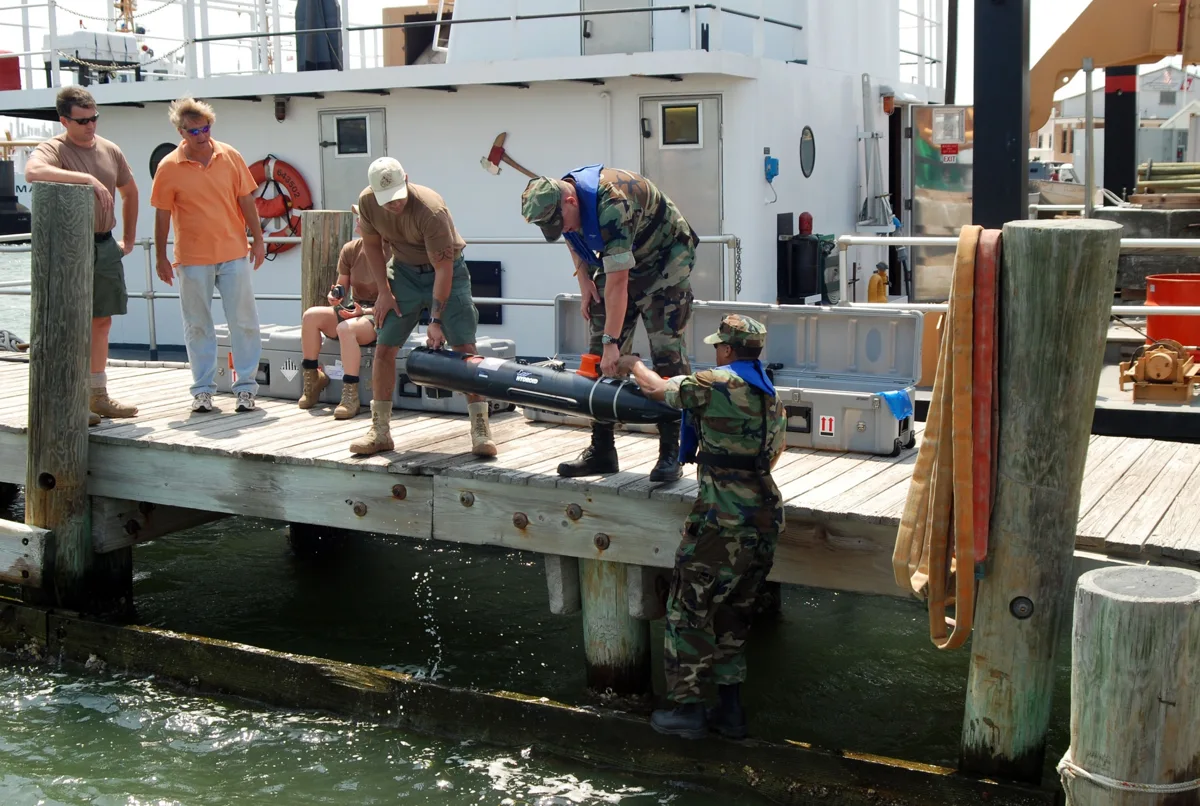
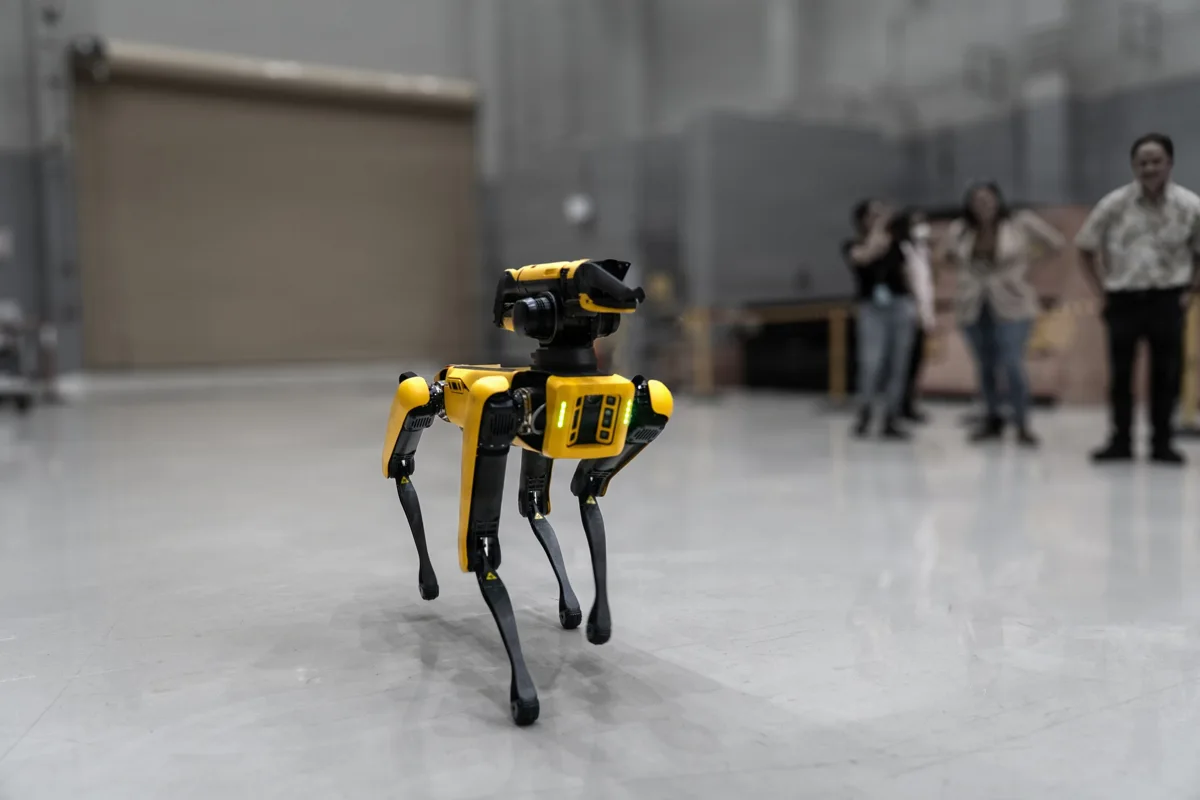
The shipyard robot photograph shows a real demonstration platform with an attached sensor head [2]. It illustrates how equipment can be carried by a mobile base. The image alone does not prove which other payloads are supported, how quickly they can be changed or whether the displayed configuration entered service.
The difference between an option and a supported configuration
A supplier may list a proposed payload, demonstrate a prototype installation, complete integration or deliver a supported configuration. These are different stages. A reader should ask which stage the evidence actually establishes, and whether the named operator has the same version.
Support includes instructions, training, spare parts, test equipment and responsibility for faults at the interface. When a measurement fails, the operator needs to know whether the vehicle, payload, software or connection is responsible. Divided supplier responsibility can otherwise leave a modular system harder to maintain than a tightly integrated one.
Questions that reveal the real value
- What can be changed by a trained user, and what requires specialist support?
- Which combinations have actually been tested and accepted?
- What performance changes with each configuration?
- Are software interfaces, licences and data formats documented?
- Who supports faults involving more than one supplier's component?
Does modularity always reduce cost?
No. Common parts and interchangeable equipment can reduce duplication, but interface development, testing and configuration management also cost money. The strongest case is tied to plausible changes the operator expects to make, rather than paying for flexibility that will never be used.
What should a good demonstration show?
It should show the complete task after the change, with the resulting data, operator procedure and configuration identified. A short video of removing a component establishes accessibility. It does not establish that the replacement delivers the required mission product reliably.
Publication history
- — Expanded into an illustrated guide with worked examples, comparison visuals and linked primary sources.
Suggest a correction to this entry
Follow the evidence
Source types identify who makes the claim. Programme milestones and supplier statements should be read in context.
- Ukrspecsystems — PD-2 configuration and payload information (opens in a new tab)Manufacturer claims
- U.S. Navy — Spot shipyard demonstration, August 2025 (opens in a new tab)Government image record