AeroVironment announced on 8 October that its VideoRay subsidiary is supporting an AEVEX-led team selected for a prototype Other Transaction Agreement following the US Navy and Defense Innovation Unit Mine Countermeasure Modernization Prize Challenge. BlackSea Technologies, now part of AEVEX Maritime Systems, was one of three challenge-prize winners. The announcement does not give an agreement value, production quantity or fleet delivery date.
What the in-water test showed
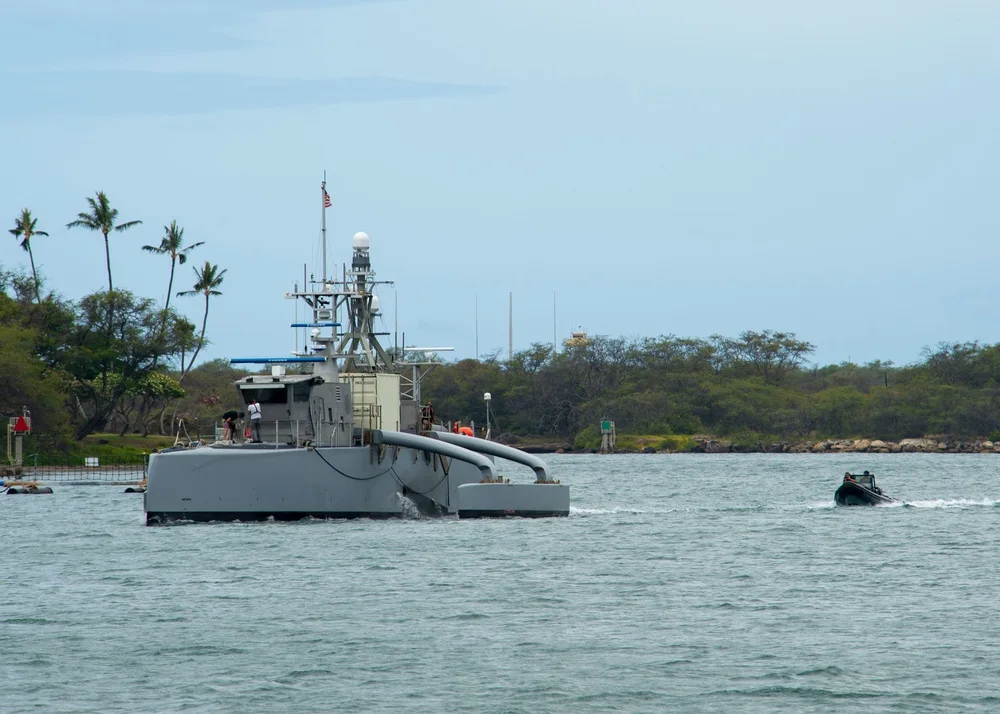
In competitive testing, VideoRay's Mission Specialist Defender remotely operated underwater vehicle was launched from and recovered to an AEVEX uncrewed surface vessel using an autonomous launch-and-recovery system, according to the supplier. Operators controlled the mission beyond the horizon from a remote ground station. The reported sequence included surface-vessel transit and station-keeping, ROV launch, target investigation, simulated neutralisation and post-engagement assessment. The neutralisation was simulated: the release does not establish clearance of a live mine or publish detection, identification and reliability measurements.
The pairing matters because a surface vessel can transport an intervention ROV toward a suspected mine while keeping personnel away from the immediate hazard. The challenge tested a connected detect-to-engage workflow, but the supplier account does not identify the mine-like targets, environmental conditions, range from operators or independent assessment criteria. It should therefore be read as evidence of a demonstrated sequence in a competition, not proof that the whole package is ready for every operational minefield.
Prototype step and next evidence
AeroVironment says winning systems will be integrated into the fleet's autonomous mine-countermeasure kits. That is a forward-looking integration plan. Selection for the prototype effort does not itself confirm a completed fleet installation, operational acceptance or a procurement order for Defender vehicles. A later Navy notice on agreement scope, system integration and evaluated performance would establish how far this approach has progressed. The site's recent Royal Navy SeaCat report covers a separate UK training and sea-trial transition; this US selection adds a distinct surface-to-underwater prototype pathway.
Publication history
- — Added prototype-team selection and in-water test with simulated-neutralisation and acceptance limits.
Suggest a correction to this entry
Follow the evidence
Source types identify who makes the claim. Programme milestones and supplier statements should be read in context.