Start with the function, not the label
“Autonomous” is often used as though it describes an entire vehicle. In practice, software may control some functions while people retain others. Holding altitude, following a route, avoiding an obstacle, managing a survey and coordinating several vehicles represent different responsibilities. A useful explanation names the task, the conditions and the human role.
Automation can follow a predictable sequence; autonomy often involves selecting behaviour in response to changing observations. The boundary is not a simple ladder from bad to good. A reliable, limited function may be more useful than a flexible one whose decisions an operator cannot understand. Mission success depends on the combination of software, people and procedures.
Four responsibilities that should not be confused
- Vehicle controlMaintain movement and execute supported manoeuvres.
- PerceptionInterpret observations and represent uncertainty.
- Task managementTrack progress and handle exceptions within defined limits.
- Human authoritySet objectives, supervise and retain explicitly assigned decisions.
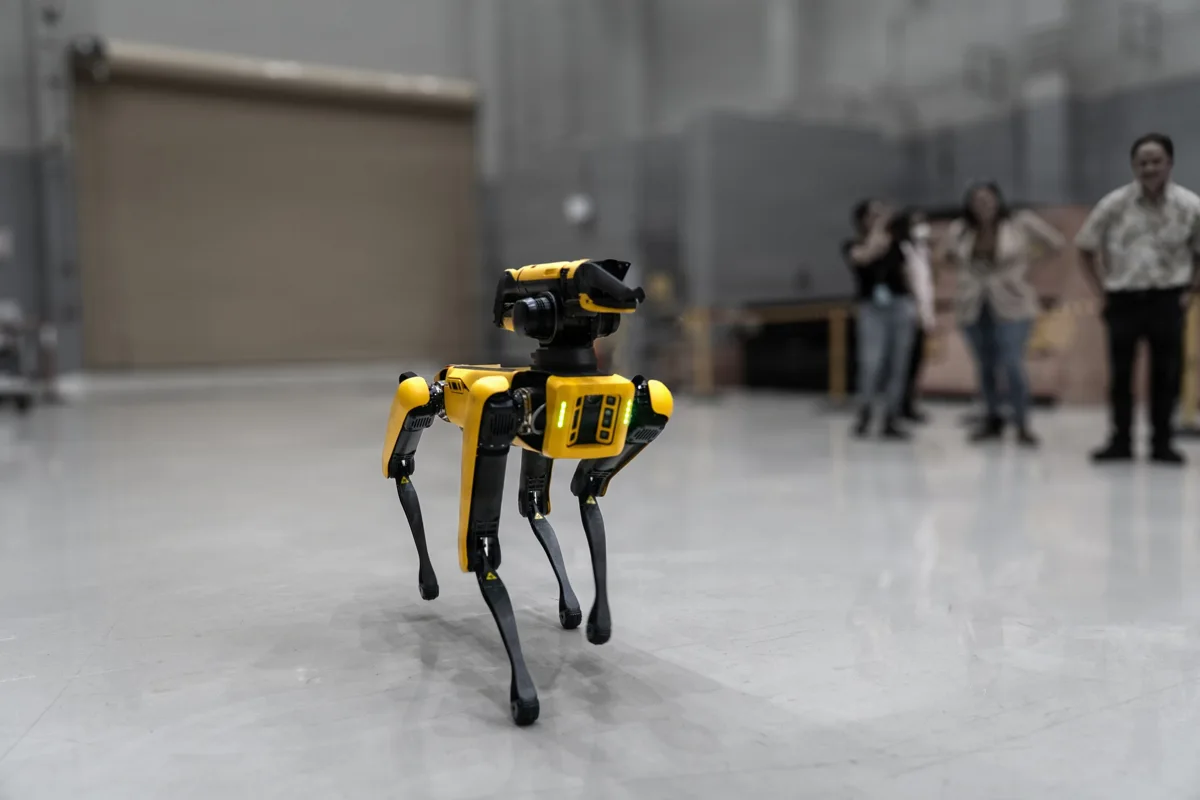
This framework is an editorial aid, not an official classification. It separates vehicle control from interpretation and authority. A system can be advanced in one area and conventional in another. An aircraft that navigates automatically may still require a person to interpret its imagery; a robot with automatic obstacle avoidance may still be driven remotely for a delicate inspection.
Describing the boundary makes claims testable. “The robot completed an inspection route while a supervisor could pause it” is informative. “AI-powered robot” is not: it says nothing about what was delegated, whether the task succeeded or how much support was required.
Worked example: a fictional depot inspection
Imagine three robots inspecting an equipment depot. People define the inspection areas, times and items of interest. The robots follow their assigned routes and collect images. When one encounters a blocked aisle, it stops and requests assistance. Another returns an image too blurred to evaluate.
The software has reduced routine driving, but the task is not finished until someone resolves the obstruction and repeats or rejects the unusable observation. Counting three moving robots would exaggerate the result. Better measures include accepted inspections, interventions, time spent supervising and unresolved exceptions.
Now suppose all three request assistance at once. Average workload may look low, yet the peak demand can exceed what one supervisor can handle. A claim that one person can manage many vehicles needs evidence about these exceptional periods, not just an uneventful demonstration.
Real example: DARPA OFFSET
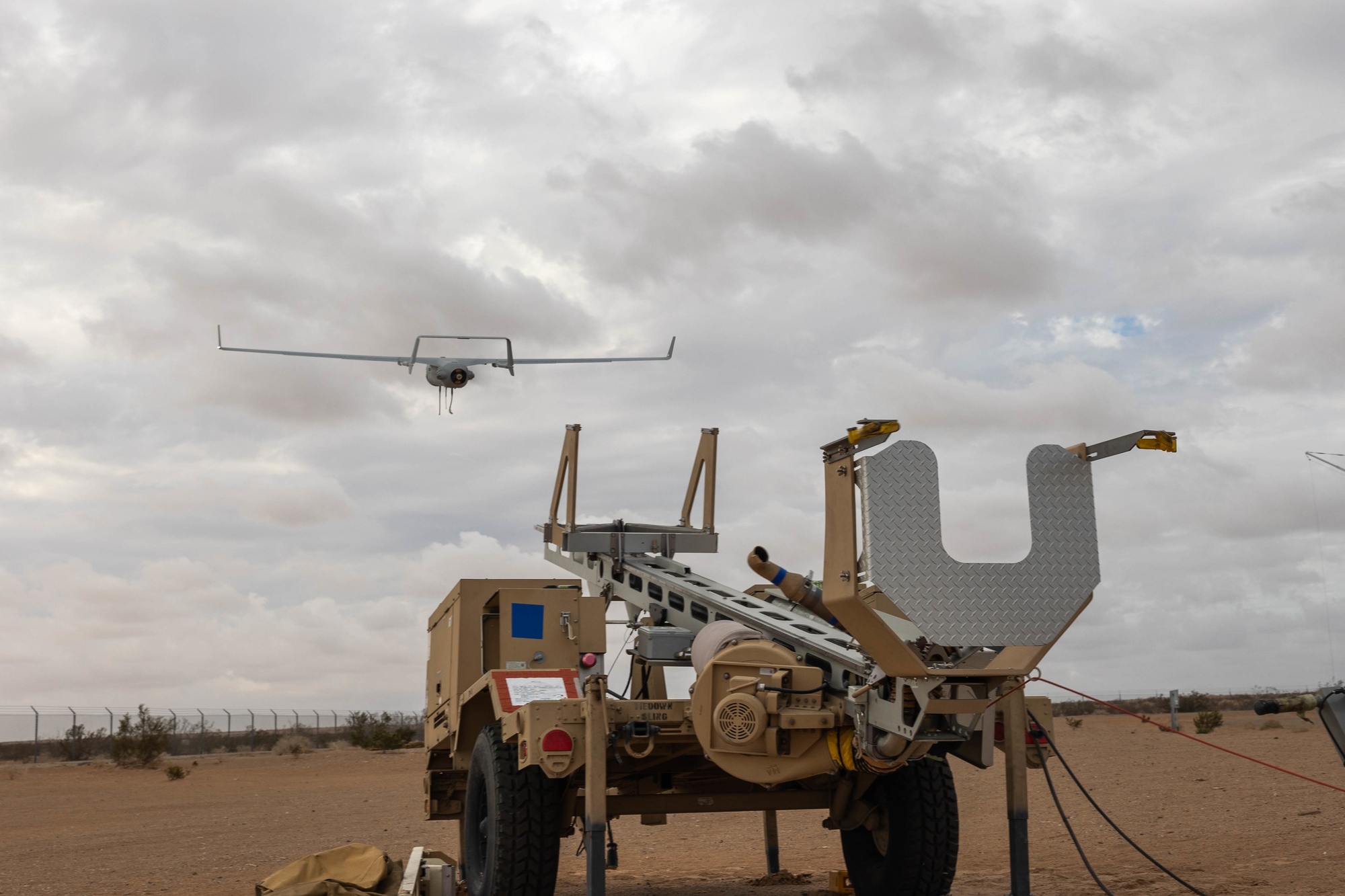
DARPA's OFFSET programme tested collaborative air and ground systems and human–swarm interaction through a sequence of field experiments. Its December 2021 account describes the final experiment after four years of development [1]. The important lesson is that coordination and operator interaction were research subjects in their own right, rather than consequences of adding more vehicles.
This is historical research evidence. It should not be read as a statement that any current product has inherited all the demonstrated functions. A programme demonstration and a supported operational system are different milestones.
Coordination is more than simultaneous operation
Several vehicles can fly or drive at the same time without meaningfully cooperating. Coordination may involve allocating work, avoiding duplicate observations or maintaining a shared understanding of task completion. Each adds requirements for compatible information, timing and exception handling.
A useful comparison is a team of surveyors. Sending several people to the same field increases headcount; dividing the work, agreeing reference points and combining their results creates a coordinated survey. Robots also need those interfaces. A “swarm” label does not establish how responsibilities are shared or what happens when a member becomes unavailable.
The operator interface is part of the capability
A supervisor needs to see what the system is doing, what it intends to do next, where uncertainty is rising and which requests need attention. A wall of video feeds can move work from piloting to monitoring without reducing it. Good presentation turns exceptions into understandable decisions instead of simply adding more data.
Skydio's X10D page provides a smaller-scale example of advertised onboard assistance, including automated mapping and flight-support functions [2]. These features should be assessed separately from multi-vehicle coordination. Familiarity with a single aircraft does not by itself validate supervising a team.
What convincing evidence would include
- A clearly bounded task and an explicit description of the human supervisor's responsibility.
- Trials that record unsuccessful attempts, interventions and recovery from ordinary faults.
- Measures of useful output and operator workload, not only the number of vehicles moving.
- A defined software configuration, training requirement and process for reassessment after updates.
Does more autonomy always mean fewer people?
Not necessarily. It may reduce direct control while increasing demand for planning, maintenance, data review or software support. Assess the complete team over repeated operations. The total workload matters more than the absence of someone holding a joystick.
Does an autonomous aircraft choose whether to use a weapon?
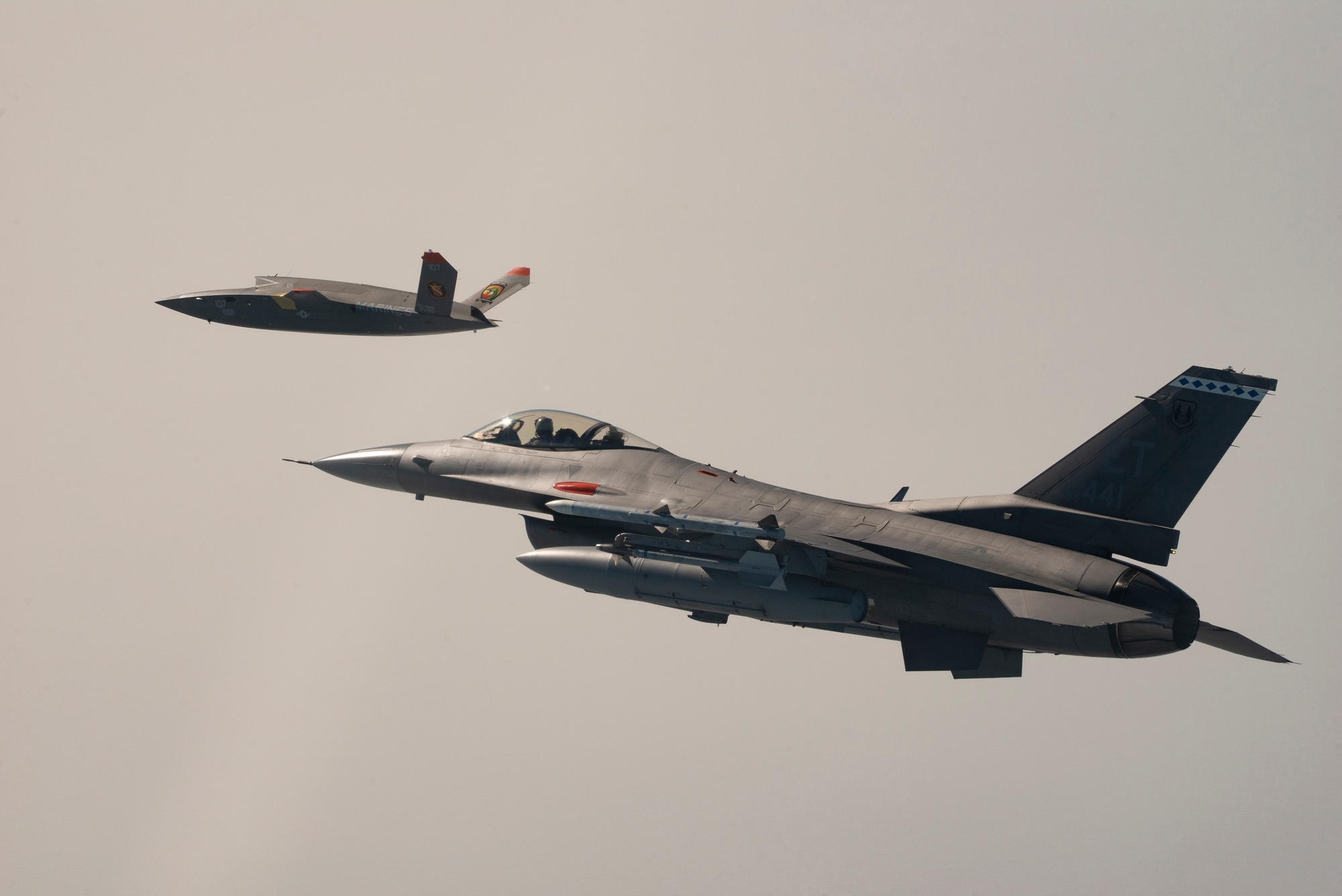
That cannot be inferred from autonomous flight. Movement, sensing, mission coordination and the authority to use force are separate questions. This guide discusses navigation, inspection and supervision; neither the examples nor the accompanying historical flight photograph establishes autonomous weapon employment.
Publication history
- — Expanded into an illustrated guide with worked examples, comparison visuals and linked primary sources.
Suggest a correction to this entry
Follow the evidence
Source types identify who makes the claim. Programme milestones and supplier statements should be read in context.
- DARPA — OFFSET final field experiment (2021) (opens in a new tab)Government research programme
- Skydio X10D — navigation, sensing and onboard assistance (opens in a new tab)Manufacturer claims