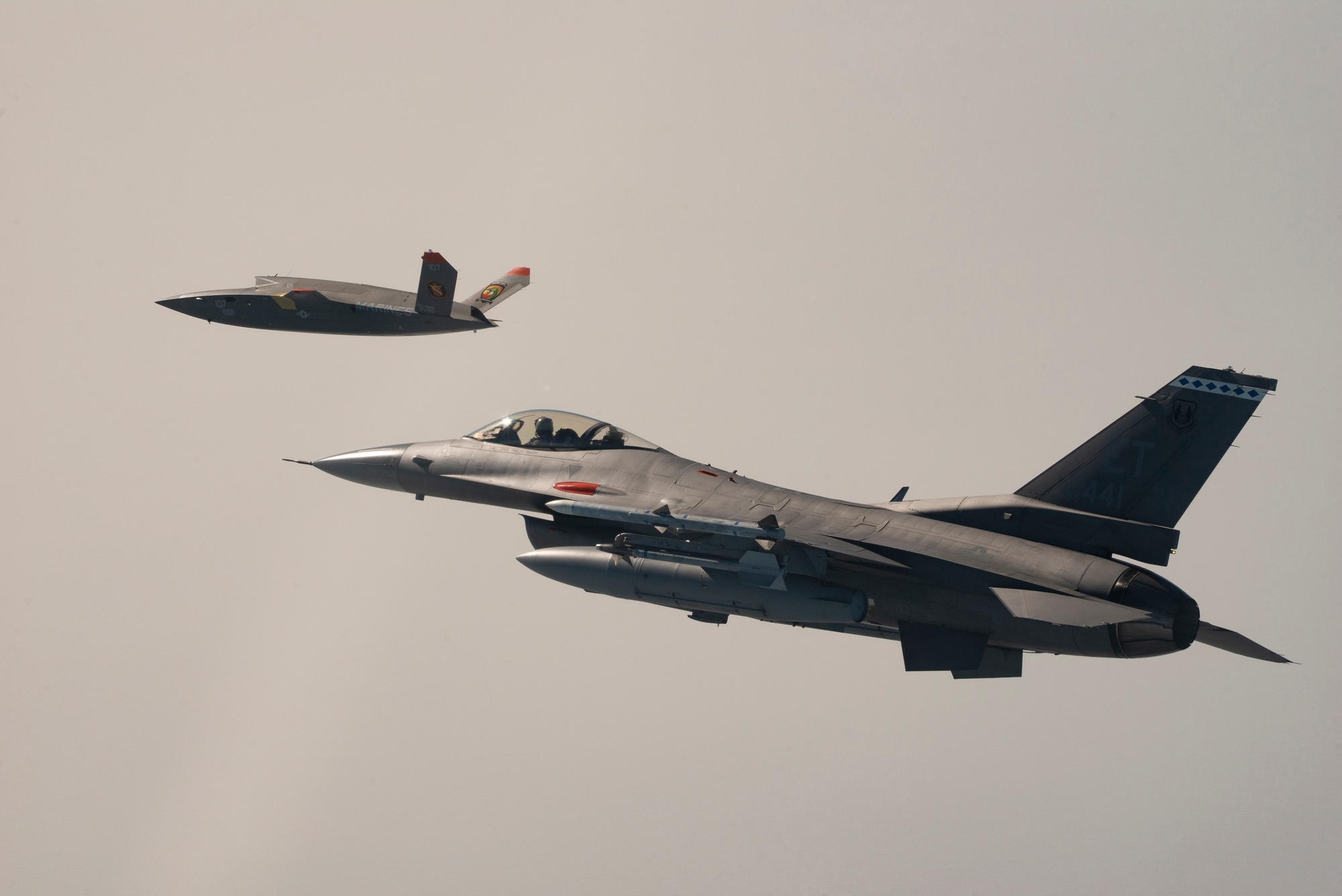
Four operating domains
Air profiles cover uncrewed aircraft. Land profiles cover ground vehicles and mobile robots. Sea-surface profiles cover vessels operating on the surface. Underwater profiles cover autonomous vehicles, remotely operated vehicles and gliders. These are ways to navigate the library, not a ranking of military importance. Adjacent counter-drone equipment has its own support-systems grouping.
Uncrewed does not mean fully autonomous
A vehicle can lack an onboard crew while being remotely controlled by a person. It may also offer assistance, supervision or autonomous functions. Identify the specific function, configuration and evidence before comparing claims. For underwater vehicles, NOAA's AUV and ROV distinction provides a useful starting point: untethered autonomy and tethered remote operation are different control arrangements. Hybrid systems require a more specific description.
Compare the right fields
Aircraft profiles retain flight-related specifications such as altitude and launch or recovery arrangements. Ground profiles add mobility and terrain context. Surface-vessel profiles record displacement and sea-state qualifications. Underwater profiles record operating depth. All retain source-linked dimensions, payload, endurance and other disclosed data. A missing number is a research gap, not an invitation to infer it from a similar vehicle.
Keep the platform and mission package separate
The same base vehicle may support several roles without every proposed package being operational. The Navy's public MCM USV description illustrates a surface platform with modular mission equipment. The ground-vehicle sector similarly distinguishes a carrier from the various systems it might carry. Use the named variant and the dated source rather than transferring a family's best advertised figures to every configuration.
Read status before specifications
In this library, documented use, production commitments, development trials, supplier claims, concepts and unverified reports have different labels. New announcements can change a programme's status without establishing new verified performance. Review dates show when the source record was checked; publication dates show when a page changed.
Explore and improve the coverage
| Domain | Useful field | Context to retain |
|---|---|---|
| Air | Payload and flight duration | Named aircraft and load |
| Land | Mobility and carrying capacity | Terrain and installed equipment |
| Sea surface | Hull and mission package | Vessel configuration and conditions |
| Underwater | Depth and control arrangement | Model, tether and energy configuration |
Air: access to a viewpoint, with a supporting system
An uncrewed aircraft moves sensors or other payloads through the air. Fixed-wing, multirotor and hybrid arrangements solve movement and take-off problems differently. Those design choices do not by themselves establish a role, an autonomy level or readiness for service. A photographed prototype and an operator's supported fleet may look similar while having very different evidence behind them.
Read the whole system: the aircraft, payload, ground equipment, people and relevant permissions. A manufacturer can offer several payloads without every combination having been integrated or accepted. A useful profile therefore names the configuration and distinguishes a demonstrated capability from a catalogue option.
Land: mobility and the job carried on the vehicle
Ground robots include wheeled, tracked and legged platforms. The transport function, the payload and the control arrangement are separate subjects. General Dynamics describes S-MET and MUTT equipment with different modes of control and modular mission payloads; its product page also distinguishes future capabilities from current product descriptions. That is a useful reminder to read the wording around each claim. [3]
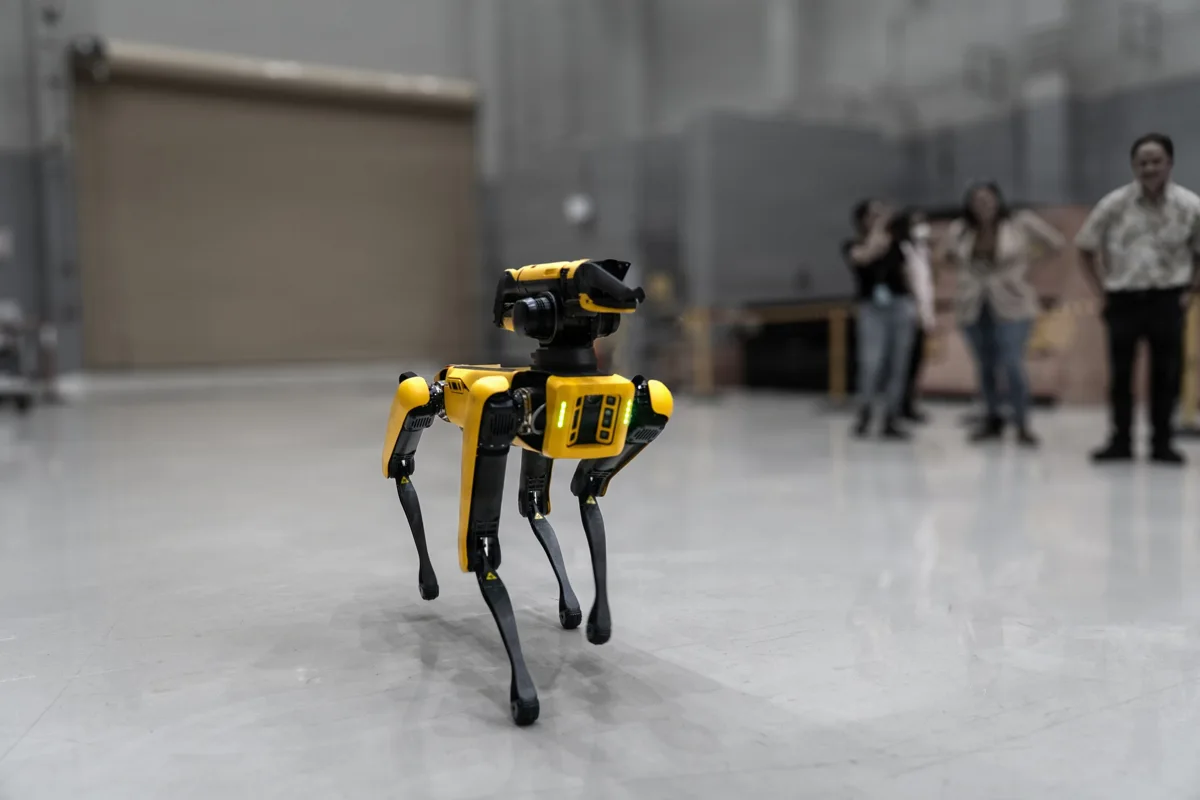
The shipyard robot photograph below is an example of a real support activity. It is not a photograph of MUTT or evidence that every legged robot has a defence role. In a catalogue, a logistics carrier, an inspection robot and a remotely operated disposal platform should retain their distinct tasks even though all operate on land.
Sea surface: a vessel is not its mission package
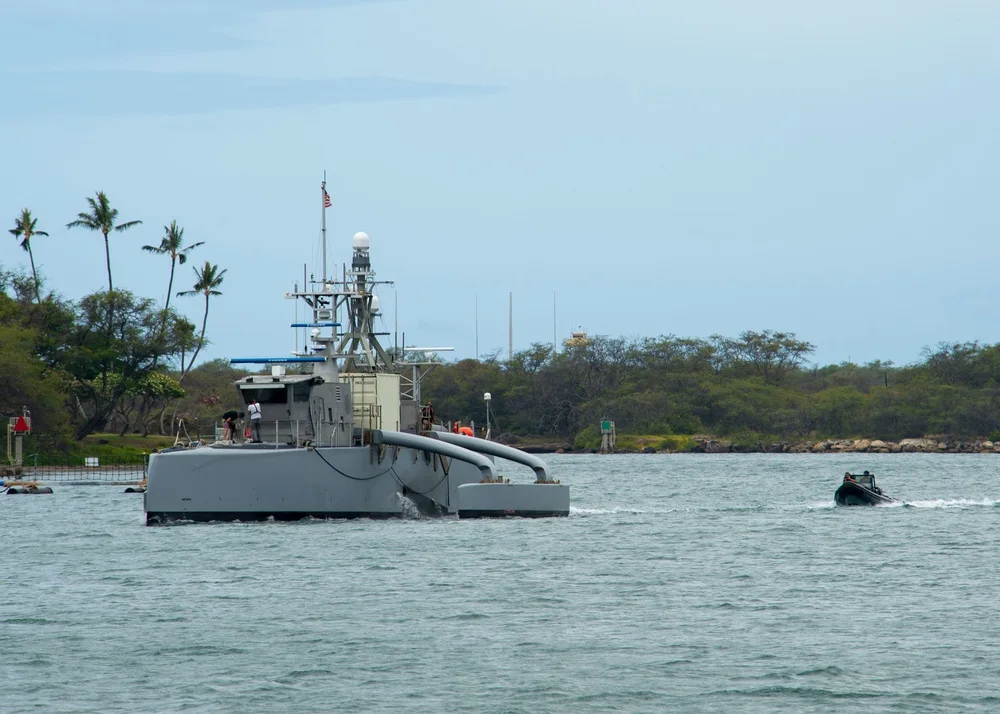
A surface vessel must be considered together with its installed equipment and support arrangements. A hull that participates in an exercise has demonstrated participation in that event; it has not thereby demonstrated every mission proposed for the wider programme. Sea Hunter's historical photograph provides platform context rather than a statement of current fleet readiness.
Mine-countermeasure coverage illustrates the importance of separating carrier and equipment. A programme can combine a surface vessel with several different systems, each with its own maturity and acceptance history. Keep the configuration, programme and operator connected, but avoid transferring every fact about one element to the whole package.
Underwater: physical connection changes the information flow
NOAA distinguishes an untethered AUV from a tethered ROV. The distinction matters because a cable can carry information between the vehicle and its supporting team, while an untethered survey may store data for later retrieval. These are broad arrangements, not a complete description of every hybrid design. [1]
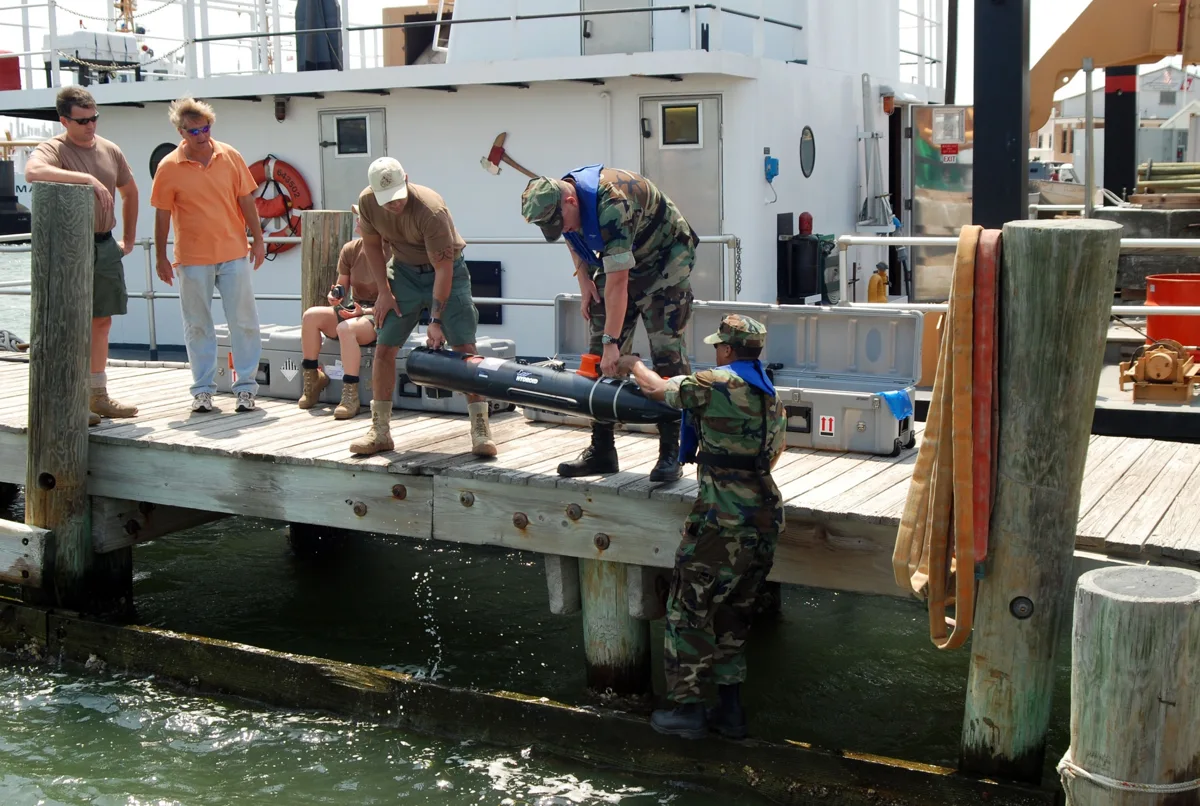
In the preparation photograph, people and support equipment are visible alongside the vehicle. They are part of the activity that makes a survey possible. An article that discusses only operating depth and battery duration misses the preparation, recovery and interpretation that turn a vehicle run into useful information.
Worked example: comparing a port inspection
Imagine an invented study of a port facility. An aircraft could document above-water surfaces, a ground robot could inspect accessible land areas, a surface vessel could support water-based observations, and an underwater vehicle could collect information below the surface. These are different contributions. None should be ranked as the best drone solely because it has the highest speed or longest advertised endurance.
The comparison should specify the inspection output, the relevant environment, the actual equipment and the support required to obtain a reviewed result. Some information may remain unavailable. This example explains why a multi-domain library needs different fields and source qualifications; it is not a deployment plan or a claim that the pictured systems perform those tasks together.
Questions that work across every domain
Who made the vehicle, who integrates the equipment and who is confirmed to operate the named configuration? Which source establishes its status, and when? What does autonomy mean for the particular function? Are the dimensions and performance figures attached to the same variant? Does the evidence describe a product offer, a trial, an order or recurring use? Asking these questions consistently makes cross-domain coverage useful without pretending that all vehicles share a single performance scale.
Publication history
- — Expanded the guide with detailed explanations, worked examples and credited illustrations.
- — Added sourced land and maritime coverage with domain-specific evidence and limitations.
Suggest a correction to this entry
Follow the evidence
Source types identify who makes the claim. Programme milestones and supplier statements should be read in context.
- NOAA: AUV and ROV definitions (opens in a new tab)Government technical explainer
- US Navy: modular MCM surface-vessel programme (opens in a new tab)Government / operator
- General Dynamics: ground platform and control modes (opens in a new tab)Manufacturer